
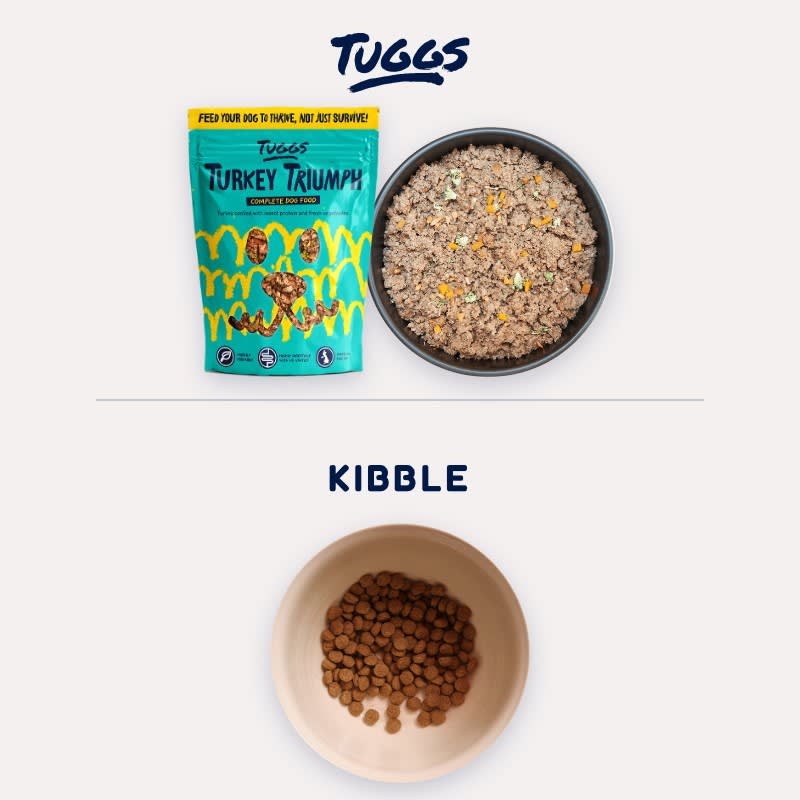

What kibble has going for it
- It costs less per day
- It keeps in a cupboard, not a freezer
 Not sure where to start?
Tell us about your dog and we’ll build their plan in two minutes.
Plus 3 free gifts
Try 7 days from £7
Kibble is made to last in a cupboard. Fresh is made to be eaten. Here’s why real, gently cooked food is the better bowl for your dog.
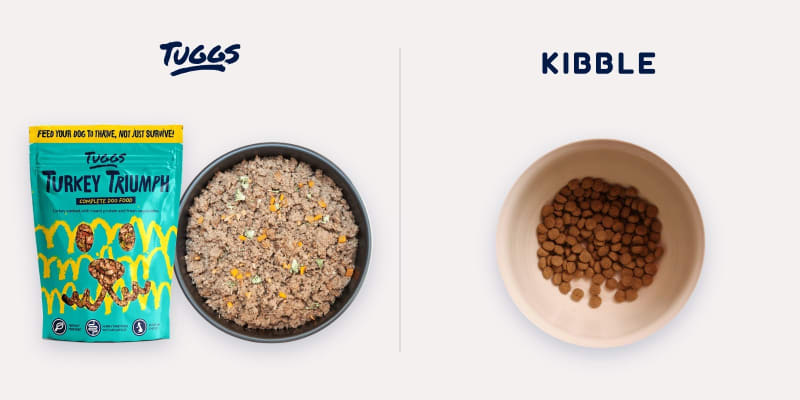
Fresh is the better bowl. Most kibble is extruded at high heat and pressure, then dried into pellets so it keeps for months. Tuggs is gently cooked at 90°C from 40–50% named meat or fish and real veg, then frozen, so it stays moist, recognisable and tempting.
Four steps from real ingredients to a bowl that looks like dinner, not a pellet.
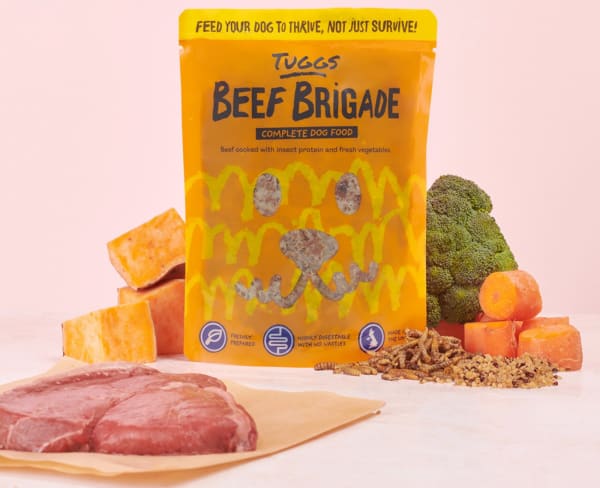
Named meat or fish makes up 40% to 50% of every recipe, with veg like broccoli, carrot and sweet potato. Human-grade, and listed in full on every pouch.
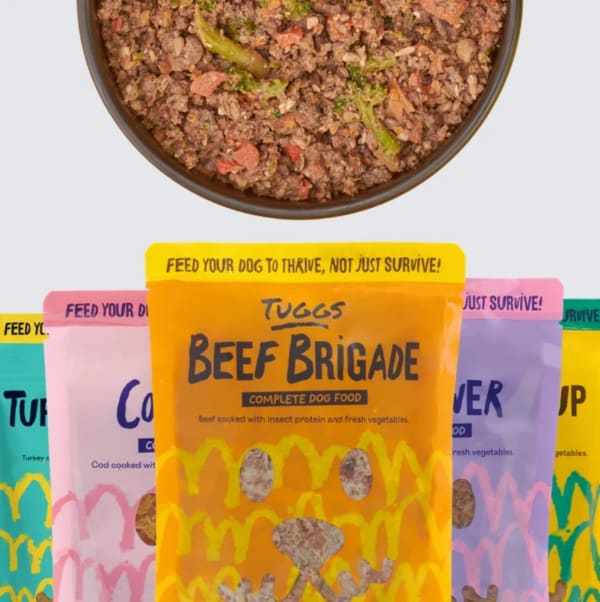
Slow, gentle cooking keeps every recipe soft and moist, at around 70% moisture, with the real veg cooked in rather than sprinkled on top.

Each pouch is frozen at peak freshness with no artificial preservatives, in the portions your plan needs. Keep pouches in your freezer for up to 12 months, then thaw what you need.
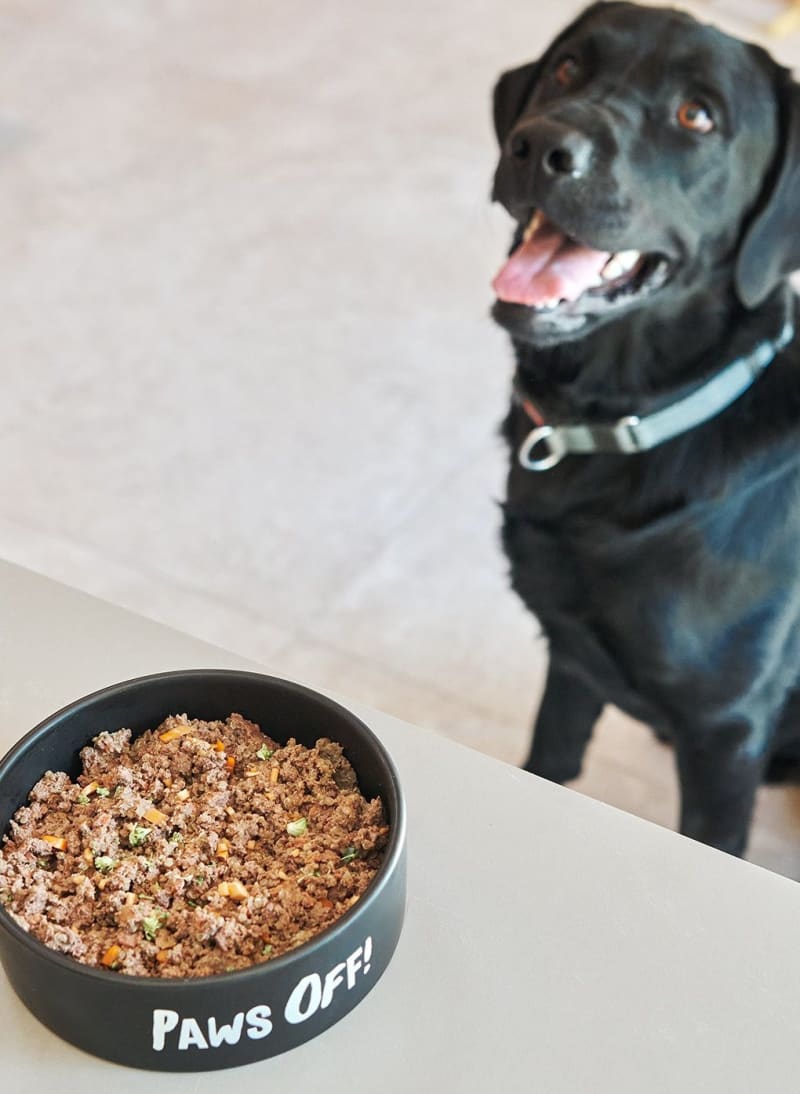
Your plan sets the daily grams from your dog's age, weight and activity. Thaw in the fridge, serve, and watch the bowl empty. Skip, pause or change your box anytime.
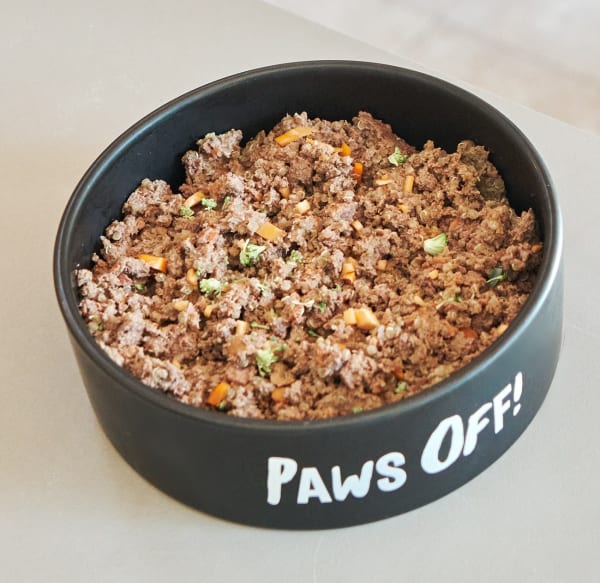
90°C
Most pet food is cooked hot and fast. We cook low and slow at 90°C, keeping the nutrients, flavour and goodness that high heat destroys, then freeze immediately to lock it in.
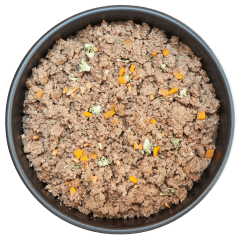
Real chicken, beef, turkey, pork or cod, never byproducts.
Sustainable insect protein is part of our recipes, and it is named on every pack.
Carrots, sweet potato and broccoli for fibre and vitamins.
Salmon oil in most recipes, and Cod Crew is rich in omegas.
We gently cook our recipes, then freeze immediately to lock in nutrients, flavour and goodness.
| Compared on |  |
Typical dry food |
|---|---|---|
| How it’s made | Gently cooked at 90°C, then frozen |
Extruded at high heat and pressure, then dried |
| Moisture | Around 70% moisture |
Dried to around 10% |
| Texture | Soft, moist, scoopable |
Hard, dry pieces |
| Named meat | 40–50% named meat or fish |
“With chicken” on a label can mean just 4% |
| Fillers, additives | No fillers, no additives |
Often cereals, “derivatives” and added preservatives |
| Portions | Set to the gram for your dog |
A rough weight-band chart on the bag |
| Mealtimes | Soft, tasty meals even fussy eaters devour |
The same dry pieces, every meal |
| Try first | 7 days from £7, 3 gifts |
You usually buy a month’s bag up front |
See how we compare:Fresh vs rawTuggs vs other freshWhy fresh


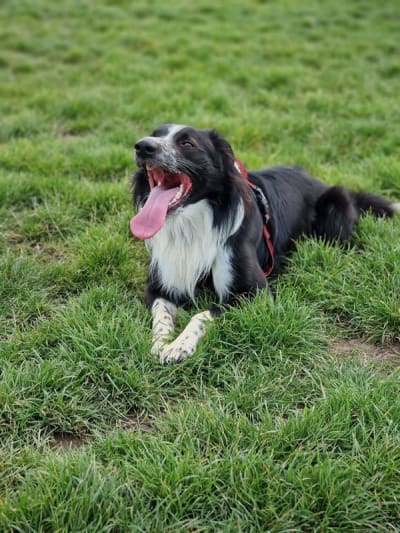





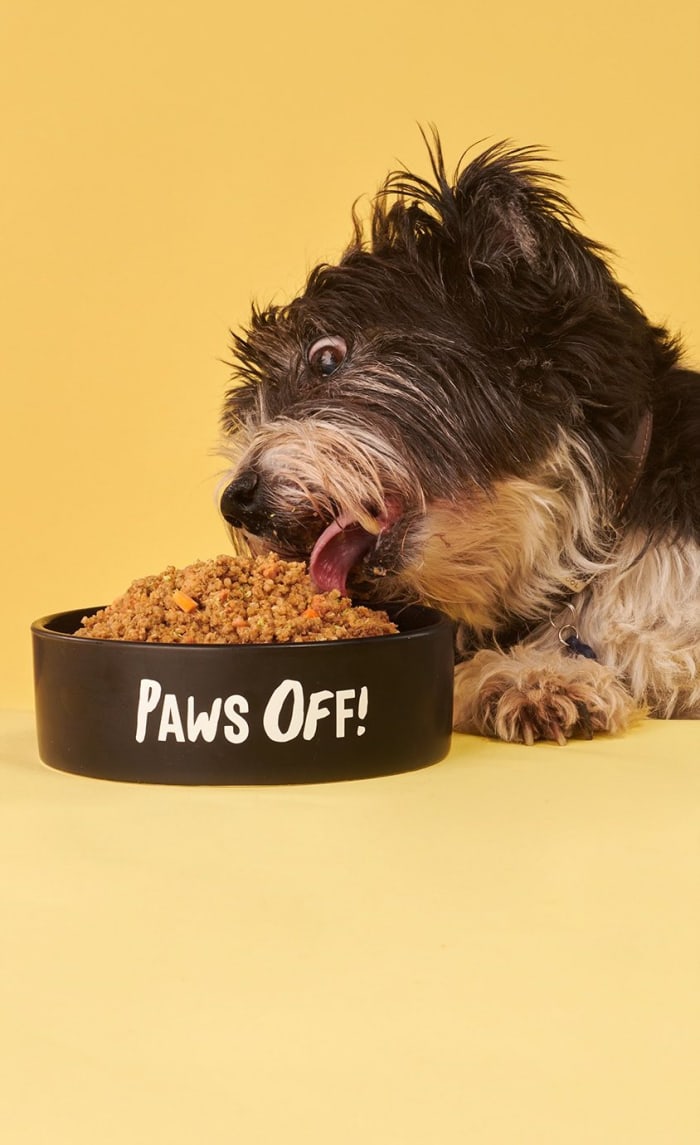
A week of fresh meals made for your dog, plus three gifts to help them settle in. Love it, or cancel before your next box.
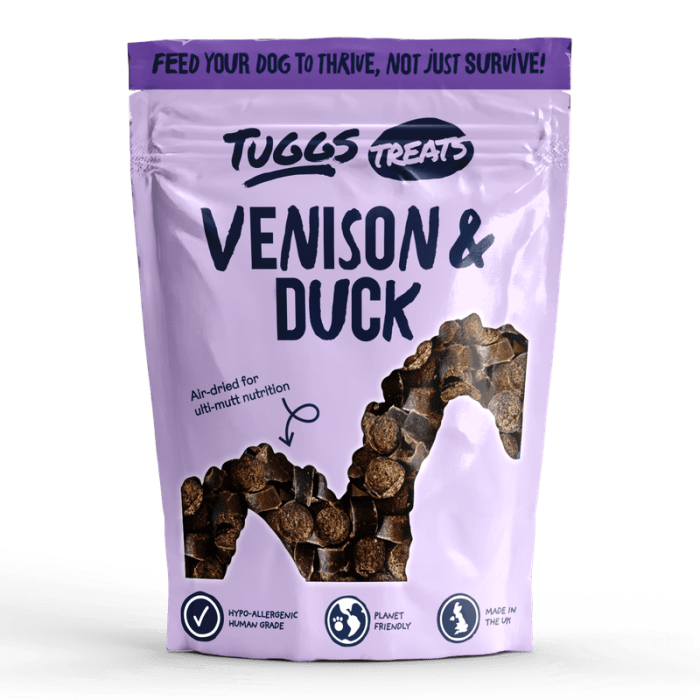 Venison treats
 Pouch clip
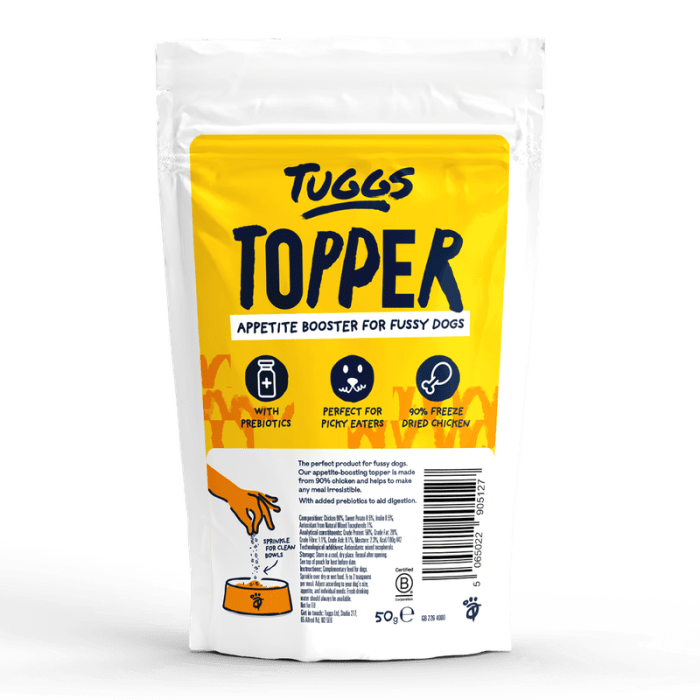 Topper
Every Tuggs recipe is complete and balanced, made with human-grade meat and veg and no fillers, so any of the five is a good place to start.
Start with one soft, fresh recipe, then switch over gradually from their current food.
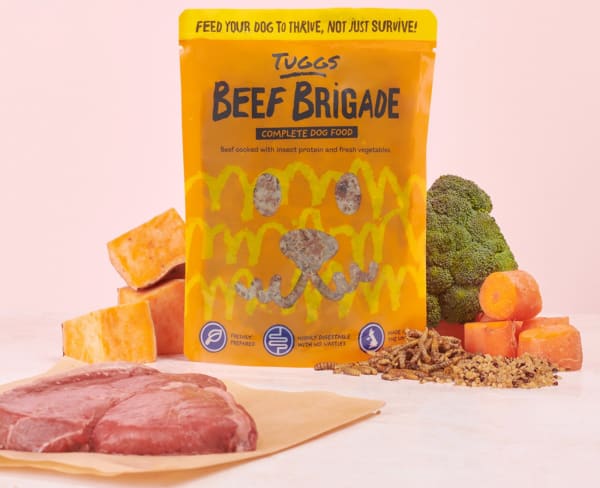 Easy first pick
A meaty bowl with heart and veg, rich and savoury and a real change of pace from dry food.
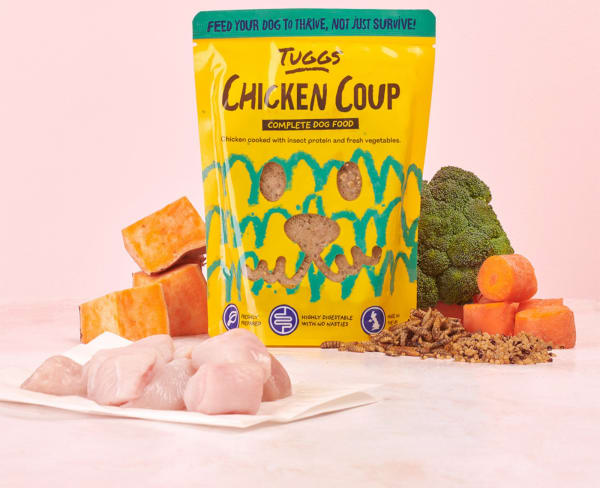
Soft enough to mix in with a little of the old food while you switch, with carrot and sweet potato.
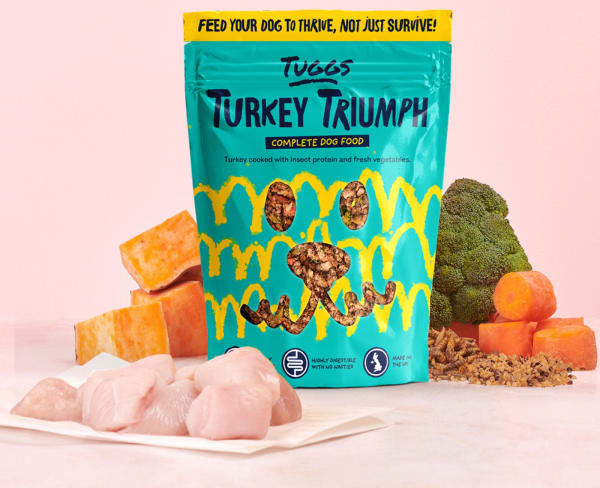
Soft and gentle, with kale, carrot and sweet potato. Our highest-protein recipe, and a calm step away from dry food.
Turn a bag of kibble over and look for the percentage of named meat. On many dry foods it’s small, or missing altogether. Every Tuggs recipe is 40% to 50% named meat or fish, gently cooked with real veg, complete and balanced, so you always know what your dog is eating. Moving over from dry? Change gradually across a week.
Most kibble is made by mixing ingredients into a dough, forcing it through an extruder at high heat and pressure, then drying and coating the pellets so they keep in a cupboard for months. Tuggs takes the gentle route: real meat and veg, cooked at 90°C, frozen quickly and delivered to your door. It looks like food because it is food.
Labels follow naming rules. “With chicken” only needs 4% chicken. “Chicken flavour” needs no set amount at all. Vague terms like “meat and animal derivatives” don’t tell you which animal, or which part. Look for named meats and a clear percentage. On Tuggs it’s on the front: 40% to 50% named meat or fish in every recipe.
Go gradually over about a week. Mix a little fresh into the dry each day, increasing the fresh and reducing the dry until the bowl is fully fresh. Take longer if your dog has a sensitive tummy. Because fresh is moist and dense, you’ll feed a smaller volume than you may be used to, so use the grams shown in your plan.
Even part fresh is a step up from all kibble. If budget is the worry, choose a half portion plan and top up with their current food, weighing both so the daily total still suits your dog. If you’re unsure how to balance the two, ask your vet.
Most dogs dive straight in. Some need a few days to adjust to real food after a diet of dry pellets, so keep treats simple, stick to a routine and watch appetite and stools. If you see anything that worries you, such as sickness or a lost appetite, pause and speak to your vet.
Can’t find what you’re looking for? Email woof@tuggs.uk and a real person will get back to you.
7-day trial from £7 + 3 free gifts, and you can pause or cancel anytime.
Venison treatsPouch clipTopper
Photo credits: Kibble: 'Dog food in a bowl' by James Redekop, CC BY-SA 2.0, via Wikimedia Commons (modified)