
The Ultimutt Labrador Handbook

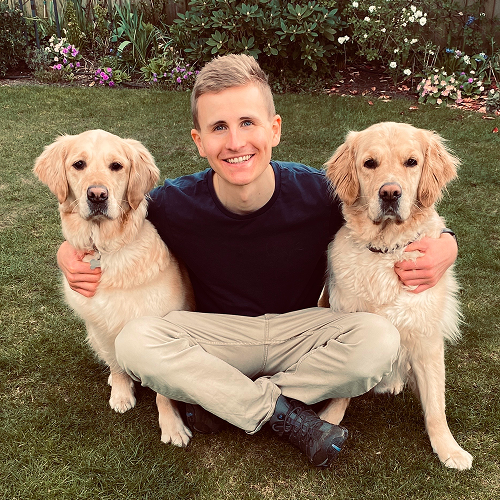

Reviewed by Dr Liam Bullock BVSc (Hons) MRCVS
You can normally recognise a Labrador in one of three beautiful shades - black, yellow and chocolate. There are many great traits to these canine companions - which is what makes them such a popular breed.
Introduction and History
Labradors love water, being bred once upon a time to help fishermen retrieve nets and catch escaping fish. On land, they’re equally good at retrieving, often used for collecting fallen game such as ducks. They have notoriously soft mouths and can carry things without damaging them - even items as delicate as eggs! This is a testament to their loyal and friendly temperament.
Quirks of a Labrador
Quirks of a Labrador Puppy
Any owner of a Labrador will surely know of their love for chewing, as well as their high energy levels. From puppy months and beyond, chew toys are a must to avoid losing a pair of slippers each week. Being strict on a Labrador puppy from a young age will pay dividends later on. Whilst they will chew, particularly to negate teething discomfort, they can be taught to do this on toys without chewing their way through your home! Furthermore, Labrador’s are strong dogs. Ensuring they are well trained, from a young age, will make lead walking and recall whilst exercising much easier.
Quirks of a Labrador Adult
Labradors have almost boundless energy and need regular exercise, for their mental and physical wellbeing. Labs have a gentle temperament, are easy to train and are intelligent and friendly. This energy will taper off slightly from the age of four, though they’ll continue to show energy and joy for interacting with others into their older years. In their senior years, their energy levels will decline and the amount of exercise they need (and are capable of) will similarly fall.
Health Conditions Labrador can be prone to
Like any breed of dog, there are conditions that Labradors can be prone to. The first one is obvious: obesity. Many labradors suffer from a defect in a gene regulating appetite, leading to over-eating and weight gain.. Therefore, a Labrador will become overweight given half an opportunity. Sensible feeding and plentiful exercise will negate this issue. Keeping Labradors within the weight ranges as indicated below is important to avoid putting additional strain on the joints. Hip and elbow dysplasia (where the joints and supporting soft tissues don't properly align, leading to increased wear and arthritis over time) will be more of an issue with overweight Labradors. Another common problem for Labradors is ear issues (as they’re so gorgeous and droopy!) so it’s good to be be on the look out for signs of a problem, like scratching, shaking the head, or smelly, waxy discharge.
Labrador exercise
A Labrador should have at least an hour of proper exercise each day - these pooches have plenty of energy to expel! It’s advisable to split this up into at least two walks a day. Their exercise requirements will of course decline as they age. In their puppy years, the rule of thumb is to take them out for five minutes for each month of age, ideally twice a day until adulthood. Avoiding excessive or strenuous exercise, especially as they are growing, will help to protect their joints. Their stamina will improve as they get older.
Labrador size guide
| Age | Male (cm) | Female (cm) |
|---|---|---|
| 1 month | 10.0-15.0 cm | 9.0-12.0 cm |
| 2 months | 15.0-23.0 cm | 14.0-18.0 cm |
| 3 months | 23.0-30.0 cm | 18.0-25.0 cm |
| 4 months | 30.0-38.0 cm | 23.0-30.0 cm |
| 5 months | 38.0-46.0 cm | 28.0-36.0 cm |
| 6 months | 46.0-51.0 cm | 33.0-38.0 cm |
| 7 months | 48.0-53.0 cm | 36.0-41.0 cm |
| 8 months | 51.0-56.0 cm | 38.0-43.0 cm |
| 9 months | 53.0-58.0 cm | 40.0-45.0 cm |
| 10 months | 53.0-60.0 cm | 41.0-46.0 cm |
| 11 months | 55.0-61.0 cm | 42.0-47.0 cm |
| 12+ months | 56.0-62.0 cm | 43.0-48.0 cm |
Labrador weight guide
| Age | Male (kg) | Female (kg) |
|---|---|---|
| 1 month | 3.0-5.0 kg | 2.0-4.0 kg |
| 2 months | 5.0-7.0 kg | 4.0-6.0 kg |
| 3 months | 9.0-11.0 kg | 7.0-9.0 kg |
| 4 months | 12.0-14.0 kg | 10.0-12.0 kg |
| 5 months | 16.0-18.0 kg | 13.0-15.0 kg |
| 6 months | 20.0-22.0 kg | 16.0-18.0 kg |
| 7 months | 23.0-26.0 kg | 18.0-20.0 kg |
| 8 months | 26.0-28.0 kg | 20.0-22.0 kg |
| 9 months | 28.0-30.0 kg | 22.0-24.0 kg |
| 10 months | 30.0-32.0 kg | 24.0-26.0 kg |
| 11 months | 32.0-34.0 kg | 25.0-27.0 kg |
| 12+ months | 33.0-36.0 kg | 26.0-29.0 kg |
Labrador grooming
On the whole, Labradors are quite low-maintenance in terms of grooming. They have a thick double coat which consists of a soft undercoat and a coarser outer coat, to help them in various weather conditions. They shed hair year-round, but in Spring and Autumn, they shed significantly when they “blow” their coat. During this time, regular brushing is important if you don’t want dog hair on every surface. Brushing every 2-3 weeks should be adequate but in the heavy shedding seasons, you may need to brush more regularly. Each owner (and their Labrador) is different, but sometimes they may need a bath. If and when you do bathe your Labrador, use a mild, dog-friendly shampoo. Don’t over-bath them (more than once a month) because this can strip their natural oils, and cause skin issues.
Labrador diet
Like any dog, the best diet you can feed a Labrador is one that is nutritionally balanced, to support their active lifestyle and keep their weight at the right level. Given they are prone to joint issues, skin conditions and obesity, their diet should take this into consideration. High-quality protein from a variety of sources is important to support muscle growth and general health. Protein should make up 20-30% of their diet, and good sources include chicken, turkey, beef, lamb, salmon and eggs. Fat should be given to Labradors in moderation, though healthy fat sources are encouraged - fish oils, chicken fat, and flaxseed are examples of these. Fat provides a great source of concentrated energy for Labradors but it shouldn’t make up too much of a diet (ideally around 10-15%) to avoid encountering any weight issues. Carbohydrates are good for energy, though it’s best to focus on ‘complex carbs’ that are easier on their digestive system. These include sweet potatoes and quinoa. In conclusion, given Labradors are prone to obesity, portion control is important. Choose foods that are appropriate for the age, weight and activity level of your pooch. An adult Labrador will typically require 1000-1400 calories a day. However, every dog is different, and factors such as age, activity level and whether they are neutered all influence the exact number of calories they will need. Regular weight checks with your veterinary team will help to spot weight gain early so that calorie intake can be reduced.
Why we recommend fresh for a Labrador
Highly processed kibble can really exacerbate the conditions Labradors are more susceptible to. A dog fed on a fresh food diet will live on average 32 months longer than a dog fed a dry diet (read more about this on our blog). That’s why a fresh Tuggs diet, gently cooked to lock in the nutrition, pre-portioned and tailor-made is a no-brainer for your pooch.

Promote better digestion for your Labrador
Labradors are pretty good at digesting a whole load of things (more so than us humans!) but that’s not to say they can digest anything. The human-grade ingredients we include in Tuggs is highly digestible and helps your Labrador thrive in so many ways: providing the protein for growth (particularly muscle growth), a strong heart, and of course, nice and firm poops. With ingredients your Labrador can digest, their poop will be less volumous and less stinky. Makes picking them up slightly less tedious!

Improve dental hygiene for your Labrador
Dried pellets are definitely not the answer to clean teeth (or fresh breath). In fact, due to its ultra-processed nature, kibble is more prone to getting stuck in your pup’s teeth, contributing to decay and plaque build-up. Unsurprisingly, a fresh-food diet contributes far less to this. Moreover, the fresh ingredients contribute to a stronger overall immune system, ready to fight off any bacterial infections in the mouth or beyond.

Maintain healthy joints for your Labrador
Labradors can be prone to issues with their joints. Fortunately, a lean body condition will lessen the chances of issues manifesting - easily achievable on a Tuggs diet. Our salmon oil in each recipe has loads of Omega-3 fatty acids, the first port of call for any doggy looking to improve arthritis and reduce inflammation. Even if kibble did contain some of these healthy fats, the ultra-processed nature of the food makes it harder for your Labrador to absorb the goodness. Furthermore, the fats can go off given kibble has such a long shelf life. Fresh food is, well, fresh. The ingredients land on your doorstep with all their goodness ready to nourish your beloved.

Maintain a healthy weight for your Labrador
Our algorithm will sort a tailor-made diet for your Labrador, with clear portioning, and can be adapted as your pooch grows from a puppy into a lean adult. An overweight Labrador will be at a far increased risk of various conditions including arthritis, diabetes, and even cancer. Fresh food with no dodgy ingredients is a pretty easy way to stay on top of the weight issue!
Reviewed by Dr Liam Bullock BVSc (Hons) MRCVS
As a small animal vet, Liam has spent time working in both first opinion and referral-level practices. Combining a passion for teaching others with his education, Liam decided to dedicate some of his non-clinical time to tutoring students who were preparing for exams or struggling at school. Then, after gaining a strong affinity for educating owners about their pets, and a keen interest in raising awareness about animal health issues, Liam began writing. This allows him to raise awareness of important animal health issues outside of the consultation room.

Every dog is unique, and their meals should be too. Our expert-approved, nutrient-rich recipes are customised to fit your dog’s size, breed, and health needs. With Tuggs, feeding your dog healthy, delicious meals has never been easier—just click, create your plan, and we'll handle the rest.
Create my plan